
BIRD BRAINS
Take wing with Stoicism


On my farm in western Connecticut, we are feted by a pageant of birdlife. Blue herons, bald eagles, owls, cardinals, jays, catbirds, pileated woodpeckers, and tiny ruby-throated hummingbirds the size of your thumb are among the many species that flit by and soar above. I am mesmerized by the way flycatchers skim over our pond, their green plumage flashing in the sun.
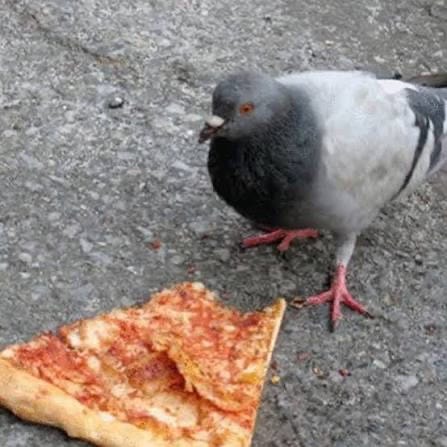
When I hike with my son Jack, I connect the wildfowl we see to people who have passed on. I’ll see an owl and say “Oh, I bet that’s Uncle Cookie,” or a cardinal, and tell Jack it’s my friend Figgy. A hummingbird, I was sure, was my pal Duncan. Jack said “Why do you pick all the beautiful birds as your family members? It’s never the greasy pigeon pecking a pizza crust–oh, that couldn’t possibly be your Aunt Chickie. A majestic sand crane in the pond, that’s your great aunt Gig, not the turkey vulture gobbling skunk roadkill up on Gobbler’s Knob.” Well, of course not. Although, pigeons were used as messengers in World War II, and my uncle Stephen Capestro served with distinction, so just maybe that pigeon in Washington Square Park with the pizza crust is a relative, too.
Across many cultures, birds are associated with death. Sometimes it’s thought that birds are an omen of death, or can even steal the spirits of the living. More often they are seen as symbols of the dearly departed, or actually carrying the soul of someone dead. Birds can also be psychopomps, who escort souls to the afterlife.
Crows and ravens come in for a particularly hard time in folklore. In Sweden they are thought to house the souls of murderers, while in France they embody the spirits of corrupt priests and nuns. It’s no wonder that in English the collective nouns for these birds are a murder of crows and an unkindness of ravens.
Odin, the Norse god of war, had two ravens: Munin, which means memory, and Hugin, meaning thought. Every morning he’d send them out and they would return in the evening, land on his shoulders, and bring him the news of the world. In my book this makes them the narcs of the avian world, spies just as bad as the Elf on a Shelf.
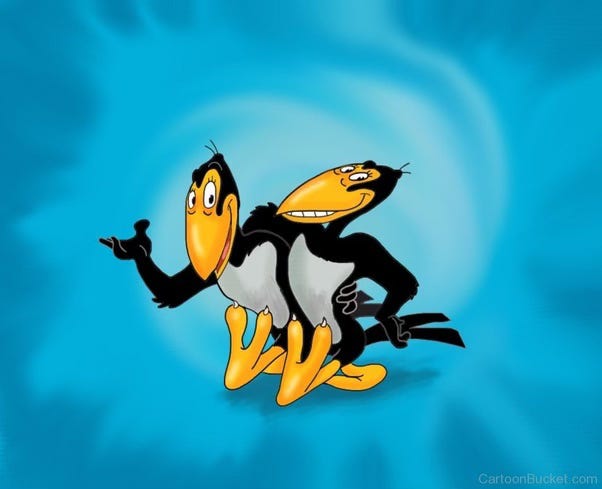
Real crows (and ravens) are unjustly maligned, I feel. We share much in common with our corvid cousins, or at least I do. They are smart, and they mate for life. Crows hold grudges; in my family we call this Irish Alzheimer’s, we forget but we do not forgive. They eat voraciously and indiscriminately. Just as I have a Jersey accent, crows have regional dialects in which they caw to their neighbors. They take a keen interest in shiny things, such as the many costume jewelry bangles with which I adorn myself. I have been described by the New York Post’s Page Six gossip column as a “raven haired, sloe-eyed pixie,” which I think also captures the essence of crows.
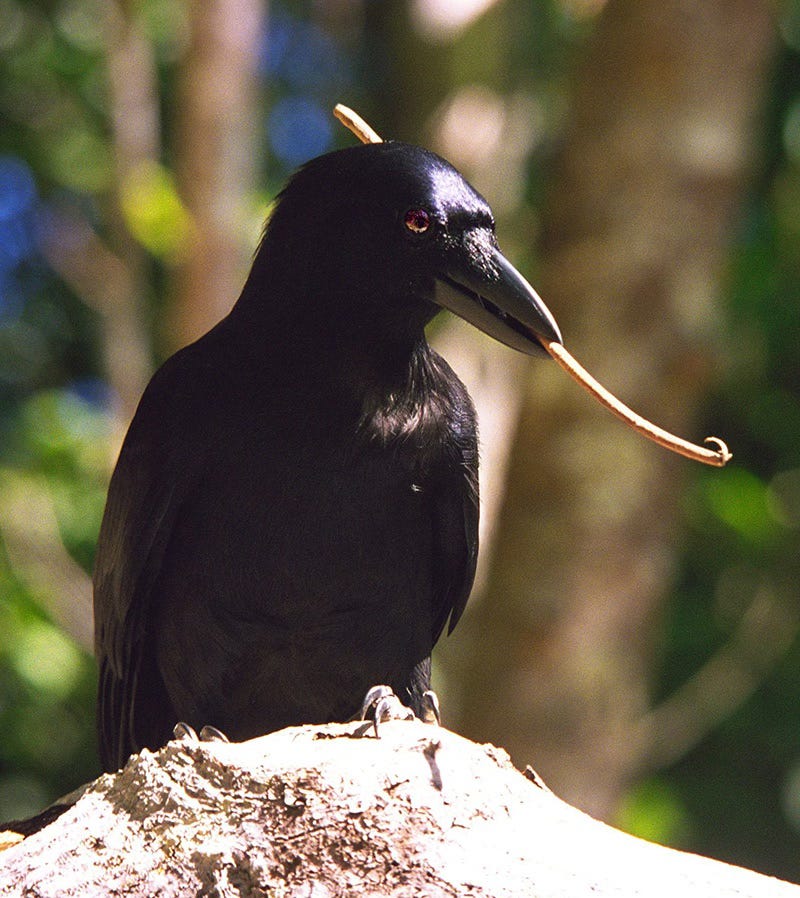
Along with humans, chimps, and orangutans, the New Caledonian Crow is one of the four creatures on Earth that makes tools. Being honest, I myself have never made a tool, but I greatly admire those who do.
Crows aren’t known for soaring to great heights like eagles, but they get high enough to see farther than we do on the ground. On ships, an observation platform on a mast is called a crow’s nest—no eagle’s nest needed. A sailor in a crow’s nest keeps watch for other ships, looks out for bad weather, and helps navigate through storms. Odysseus no doubt had a crow’s nest on his ship, for all the good it did him.
According to legend, the crow’s nest is so named because Viking sailors kept crows in a cage high on the mast of their longships. In case of foul weather, they would release the crow and the bird would lead the ship directly to land. To me these stalwart crows are infinitely more relatable than the nosey parkers Hugin and Munin.
When you are confused or don’t have a good view of a situation, you need a crow’s nest of your own. I turn to Stoic philosophy at these times. It gives me a scaffolding I can scramble up to peer beyond the turbulent clouds of what is happening now so I can see ahead to the calm ocean where I want to end up.
The Stoics call this “the view from above.” This just means gaining perspective on whatever situation you’re embroiled in. It’s easy to be overwhelmed by details, and Stoicism reminds us to look at the big picture—the bird’s eye view.