
YOU’RE ON YOUR WAY!
And you always will be, isn't that fantastic?

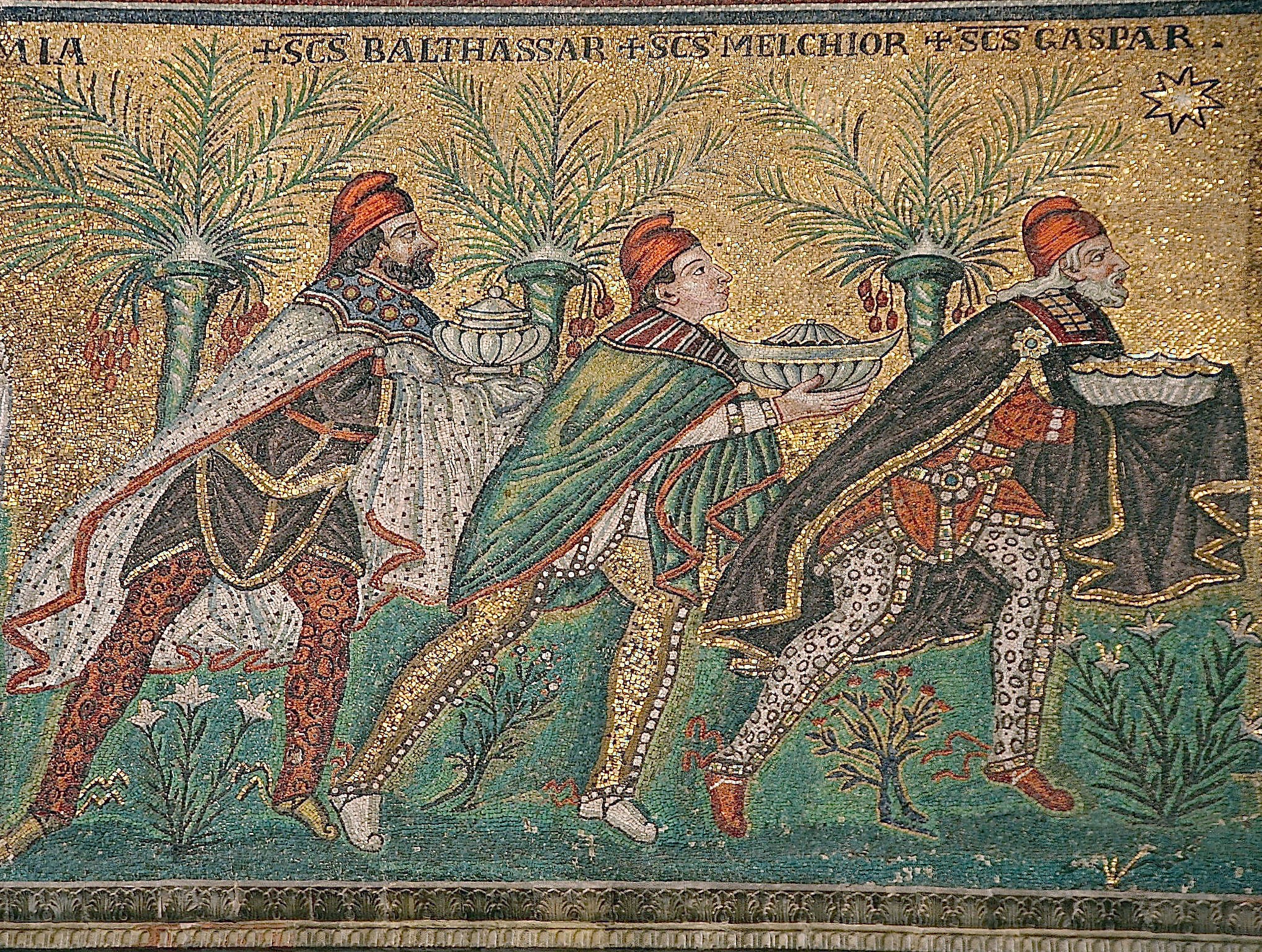
For many Western Christians, the Feast of the Epiphany just passed us on January 6th. It commemorates the visit of the three Magi to the infant Jesus. We don’t know very much about the Magi, but one possibility is that they were priest-astrologers of the Zoroastrian religion, come to acknowledge the birth of the Savior.
Epiphany also marks the end of the Twelve Days of Christmas, and as many have remarked, that comes with the gift of an awful lot of birds. Perhaps that’s what we’re supposed to eat during the Feast of the Epiphany.
The turning of the year is a time of transition. We’re on a journey, like the Magi. The calendar is just a human invention to keep track of time, but the arbitrary flip of the page has a powerful hold on us. When we’re in transition, we’re said to be in a “liminal space.” This refers to actual physical spaces, like the chained off serpentine lines for the roller coaster, or a hallway, or even driving down the road. The liminal space is something you pass through to get somewhere else.
Liminal comes from the Latin word “limen” meaning “threshold.” The ancients had liminal deities, gods and goddesses sacred to transitions. Janus, the Roman god, looked both forward and backward, which is why the first month in the western calendar is named January. The person who maintains a building honors the ancient god with the title “janitor”--they look after doors and thresholds.
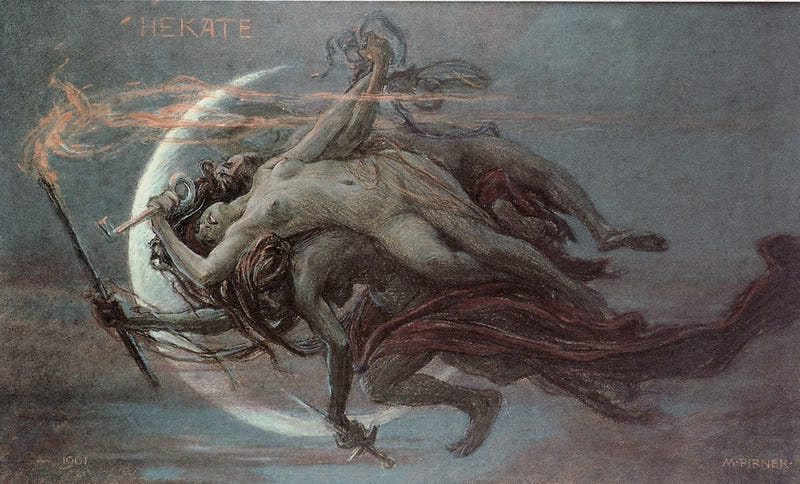
For the Greeks, both Enodia and the powerful Hecate were goddesses of crossroads and thresholds. Many more classical gods were associated with transitions and change; clearly this was an important notion to our forebears. Perhaps they had in mind the observation of the philosopher Heraclitus that “change is the only constant in life.”
States of mind can be liminal, too. When you feel betwixt and between, waiting for something to happen, it can be a queasy, Jimmy-legged feeling. We’re tempted to retreat to the comforting past, or charge toward a hoped-for future, instead of being steady where we are.
It is when you are confronting change and transition that you need a life philosophy. This doesn’t have to be a complicated set of views about the nature of existence (though it can be if you want!). For me, a life philosophy is a set of rules and values that tell me what to think when I don’t know what to think.
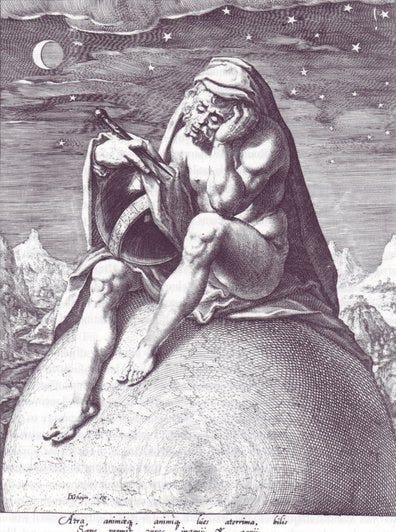
I think something that challenges us is that we never truly get out of a liminal space to what’s on the other side. A human life is a continuous transfiguration. As Heraclitus said, “No man ever steps in the same river twice, for it’s not the same river and he’s not the same man.” You better make friends with your-ever changing self; it makes these transitions far more interesting and a lot more fun. Living life is like the pursuit of happiness–the joy is in the pursuit. In Stoic terms, we are in pursuit of “eudaimonia,” or flourishing, by practicing our virtues. We may never fully attain it, but it gives purpose to our lives and meaning to moments that seem transitional and unfulfilled.
At my family’s farm, the place where the pond meets the earth is called an ecotone. In some places it is marshy, in others it is sandy. This kind of border, where one ecosystem transitions into another, is lavish with flora and fauna. Our pond’s edge is jumping with fish, frogs, turtles, red efts, beavers, river otters, minks and fisher cats, wood ducks and fly catchers. The great diversity found at such boundaries is called the “edge effect.”
Just as an ecotone flourishes with life, our liminal spaces are fertile fields for creativity. We move and transform in liminal spaces. Our identities are illuminated by how we navigate a life of infinite transitions.

We are all the protagonists of our own story and it’s tempting to believe that each one of us ought to be on a hero’s journey, on our way to accolades, wealth, fulfillment. I am on a philosopher’s journey instead. My rewards come in practicing my principles, and, as the saying goes, the friends I make along the way. These friends are both living and long since passed into dust. Seneca said, “There are obstacles in our path; so let us fight, and call to our assistance some helpers. ‘Whom,’ you say, ‘shall I call upon? Shall it be this man or that?’ There is another choice also open to you; you may go to the ancients; for they have the time to help you.”
The poet Thomas Gray wrote that “The paths of glory lead but to the grave.” Practice memento mori, and remember that your long liminal space can come to an end at any time, so make the most of it. Or in the words that another English writer, William Makepeace Thackeray, wrote about the era in which Thomas Gray lived, “It was in the reign of George II that the above-named personages lived and quarrelled; good or bad, handsome or ugly, rich or poor, they are all equal now.”
How are you living your life of continuous change and transformation?
THAT is some great writing… and thinking ✍️ 🤔
Thank you!